network configuration review identify routing issues
Modern organizations depend on reliable network connectivity to support business applications, cloud services, communication platforms, and remote users. Behind every successful network is a carefully designed routing infrastructure that determines how data travels between devices and locations. As networks become more complex with hybrid environments, multiple internet connections, and virtualized infrastructure, routing configurations require continuous attention. Misconfigured routing tables, incorrect protocol settings, or outdated policies can lead to connectivity problems, security risks, and performance degradation. This raises an important question: Can network configuration review identify routing issues? The answer is yes, as a systematic review helps organizations uncover routing errors before they disrupt critical business operations.
Routing is responsible for directing network traffic along the most efficient path between source and destination devices. Routers rely on configuration files that define routing protocols, static routes, administrative distances, access controls, and network advertisements. Even a small mistake within these settings can result in traffic loops, unreachable networks, asymmetric routing, or excessive latency. A comprehensive network configuration review examines these settings carefully to identify inconsistencies and ensure routing decisions align with organizational requirements.
One of the most common routing issues involves incorrect static routes. Static routes are manually configured and are often used for specific network segments or backup connections. Over time, network expansions or infrastructure changes can make these routes outdated or incorrect. During a network configuration review, administrators verify that static routes still point to valid destinations and that obsolete entries have been removed. Eliminating outdated routes helps prevent communication failures and unnecessary troubleshooting.
Dynamic routing protocols such as OSPF, BGP, EIGRP, and RIP require precise configuration to operate effectively. Incorrect neighbor relationships, authentication settings, route advertisements, or metric values can significantly impact network stability. A detailed network configuration review evaluates protocol configurations to ensure routers exchange routing information correctly and consistently across the network. Detecting configuration mismatches early reduces the risk of routing instability and intermittent connectivity problems.
Route summarization is another area that benefits from regular assessments. Proper summarization reduces routing table size and improves overall network efficiency. However, incorrectly summarized routes may hide important network segments or create unreachable destinations. A thorough network configuration review analyzes summarization settings to confirm they accurately represent the underlying network topology without causing unintended routing behavior.
Network growth often introduces redundant links designed to improve availability and resilience. While redundancy is beneficial, it also increases the possibility of routing loops or inefficient traffic paths if configurations are not carefully maintained. Conducting a network configuration review allows administrators to verify that redundant routes function correctly, failover mechanisms operate as intended, and loop prevention technologies are properly configured. This proactive validation supports high availability while maintaining network performance.
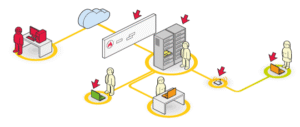
Can network configuration review identify routing issues?
Routing issues frequently affect application performance even when complete outages do not occur. Poor path selection can increase latency, packet loss, or bandwidth congestion, resulting in slower applications and frustrated users. During a network configuration review, engineers analyze routing preferences, load balancing configurations, and traffic engineering policies to ensure network traffic follows optimal paths. Optimized routing improves both user experience and overall network efficiency.
Security is another important consideration when evaluating routing configurations. Attackers may attempt to exploit insecure routing protocols, unauthorized route advertisements, or poorly protected administrative interfaces. A comprehensive network configuration review examines routing protocol authentication, route filtering, prefix lists, and access control mechanisms to reduce the risk of malicious routing manipulation. Strengthening these configurations helps protect network integrity while preventing unauthorized traffic redirection.
Cloud adoption has introduced additional complexity into modern routing environments. Organizations frequently connect on-premises infrastructure with multiple cloud providers using VPNs, SD-WAN solutions, and dedicated network links. These hybrid architectures require carefully coordinated routing policies to ensure reliable connectivity between environments. A regular network configuration review validates cloud routing configurations, confirms route propagation settings, and identifies inconsistencies that could interrupt communication between cloud and on-premises resources.
Remote work has further increased the importance of reliable routing. Employees accessing corporate systems through VPNs depend on accurate route distribution to reach internal applications securely. Misconfigured VPN routes can prevent users from accessing resources or expose unnecessary network segments. By performing a network configuration review, organizations verify that remote access routing policies remain secure, efficient, and aligned with current business requirements.
Business continuity planning also relies heavily on correct routing configurations. During network failures or disaster recovery events, backup links and alternate routes must activate automatically without disrupting critical services. A comprehensive network configuration review examines failover routing policies, redundancy mechanisms, and recovery configurations to ensure they operate correctly under failure conditions. Regular validation increases confidence that business operations can continue during unexpected disruptions.
Configuration consistency across multiple routers is equally important. Large enterprises often manage dozens or hundreds of networking devices distributed across multiple locations. Differences in routing policies, protocol settings, or filtering rules can create inconsistent network behavior and complicate troubleshooting efforts. Conducting a network configuration review helps standardize routing configurations across the environment, making network management more predictable and reducing administrative complexity.
Documentation plays a valuable role in maintaining routing accuracy. As networks evolve, undocumented changes can create confusion and increase the likelihood of future configuration errors. A structured network configuration review compares current configurations against documented network architecture, identifying unauthorized changes or discrepancies that require correction. Keeping documentation synchronized with actual configurations simplifies future upgrades, maintenance, and troubleshooting activities.
Ultimately, understanding Can network configuration review identify routing issues? demonstrates the critical value of proactive network management. Routing forms the foundation of reliable communication across every modern network, and even minor configuration mistakes can lead to widespread operational problems. Regular reviews help identify incorrect routes, protocol misconfigurations, inefficient traffic paths, security weaknesses, and inconsistencies before they impact business operations. By making network configuration review an ongoing operational practice, organizations improve network stability, strengthen security, enhance performance, support disaster recovery, and maintain reliable connectivity across increasingly complex digital environments. Proactive configuration management not only resolves existing routing issues but also helps prevent future problems, ensuring the network continues to support organizational growth and evolving technology requirements with confidence.